
The Benefits of Baby Massage: Promoting Bonding and Development
Baby massage is a gentle way to bond with your child and has many advantages for babies and parents.
It is an ancient practice that offers many benefits for infants and caregivers. It involves gentle, rhythmic strokes on a baby’s body to promote relaxation and bonding. This technique has evolved and follows specific principles to ensure safety and effectiveness.
It is easy to learn, and many parents find it an enjoyable way to spend time with their baby each day. With some practice, it can become a fun part of the daily routine for both parent and child.
Historical Significance
Baby massage has roots in various cultures around the world. Ancient Indian texts mention infant massage as part of daily care routines, and in many African and Asian countries, it has been a traditional practice for generations.
European countries adopted baby massage in the mid-20th century. French obstetrician Frédérick Leboyer popularised it in the West through his book “Loving Hands” in the 1970s, and since then, it has gained recognition in paediatric care and parenting practices globally.
Today, baby massage is taught in hospitals, community centres, and by instructors. It combines elements from different cultural traditions with a modern understanding of infant development.
Physical Benefits of Baby Massage
Baby massage offers many physical benefits for infants. It can help infantssleep better, feel less stressed, and have less pain. It may also ease stomach discomfort like gas and constipation, and improve their muscle development, immune system and digestion. For parents, it can lower stress and boost their bond with their child.
Improved Sleep Patterns
Baby massage can help infants sleep better. Gentle strokes and touches relax babies, making it easier for them to fall asleep and stay asleep longer. Regular massage before bedtime can create a calming routine which helps babies associate touch with relaxation and sleep.
Babies who receive massages often have more regular sleep cycles. They may wake up less during the night and nap better during the day. Massage can also reduce stress hormones in babies: lower stress levels lead to more peaceful sleep and fewer sleep disturbances.
Enhanced Muscular Development
Baby massage helps strengthen and tone infant muscles. Regular massages can improve a baby’s motor skills and coordination, and gentle stretching during massage helps increase flexibility, which can lead to a better range of motion in joints and limbs.
In addition to this, massage stimulates nerve endings in the skin. This increased stimulation can enhance body awareness and sensory development, and babies who receive massages may reach physical milestones sooner by starting to roll over, crawl, or walk earlier than expected.
Boosted Circulation and Immune System
Massage can improve a baby’s circulation. Better blood flow helps distribute nutrients and oxygen throughout the body, and improved circulation can strengthen the immune system. This may help babies fight off illnesses more effectively. It can also stimulate the lymphatic system, which helps remove toxins from the body and boosts overall health. Regular massage may reduce stress hormones in babies, and lower stress levels can lead to a stronger immune response.
Better Digestion and Relief from Colic
Baby massage can help ease digestive issues with specific stomach rubs helping to relieve wind, constipation and bloating, which in turn can reduce discomfort and crying from wind pain. It can also help stimulate the digestive system, leading to more regular bowel movements and less constipation.
For colicky babies, massage can provide significant relief, resulting in reduced crying spells and helping babies feel more comfortable.
Emotional and Psychological Advantages
Baby massage offers many emotional and mental benefits for infants and parents. It can help create a strong bond, reduce stress, and support a baby’s brain growth.
Importantly, it can strengthen the parent-baby bond as when parents gently touch their baby, it releases chemicals in both of them that make them feel closer. This skin-to-skin contact can help parents to feel surer of themselves when caring for their baby.
Massaging a baby regularly lets parents learn what their child likes and doesn’t like by picking up on small signs that the baby gives. This deeper understanding helps parents take better care of their baby’s needs, which in turn creates more confidence in the parent by feeling more in tune with, and able to meet, their child’s needs in a more relaxed environment.
The closeness from massage also helps babies feel safe and loved, which is fundamental for healthy growth, both physically and psychologically.
Reduction of Stress and Anxiety
Massage can calm both babies and parents. As mentioned, for babies, gentle touch lowers stress hormones in their bodies which can help them to sleep better, cry less and feel more content.
Parents often feel less stressed when they massage their baby. The quiet time spent together can be relaxing for both, which can be especially helpful for parents who feel worried or sad after having a baby.
Regular massage may also help babies handle stressful times better as they grow up as they have learnt that touch is soothing, and this may help them respond positively to it by calming down.
Cognitive and Sensory Development
Baby massage helps infants learn about their world through touch. This early sensory input is important for brain growth and it can help babies become more aware of their body parts.
The different strokes used in massage give babies varied touch experiences. This variety is good for their growing brains, and it may help them learn and think better as they get older.
Massage also helps babies focus as they pay attention to the feeling of being touched. This practice of focusing may help them learn other skills later on.
Key Principles of Baby Massage
Baby massage follows several important principles to ensure a positive experience:
- Safety: Always use a gentle touch and avoid massaging sensitive areas.
- Timing: Choose a time when the baby is alert but calm, usually between feedings.
- Environment: Create a warm, quiet space free from distractions.
- Communication: Talk softly to the baby and watch for cues of enjoyment or discomfort.
- Technique: Use smooth, rhythmic strokes with just enough pressure to dimple the skin.
Preparing for Massage
Massages typically last 15-30 minutes, depending on the baby’s age and tolerance. It’s important to use safe, natural oils suitable for infant skin (see below for a section dedicated to this).
Before starting a massage, warm your hands and remove any jewellery. Choose a safe, flat surface like a changing table or bed and use a soft blanket or towel for comfort. Make sure the room is warm enough for the baby to be undressed.
Test the baby’s mood. If they seem restless or uninterested, try again later. Massage is best when the baby is alert but calm. Remove the baby’s clothes, leaving only the diaper if needed. Start with gentle touches to see how the baby responds.
Choosing the Right Massage Oil
This is a more important issue than one realises as there have been advances in research regarding which oils best suit babies’ delicate skin. You’ll notice that olive oil is no longer suggested as a massage oil as it can create minuscule holes in the skin. Sunflower seed oil too has been found to have a less favourable effect on the epidermis (the top layer of the skin), not immediately, but over a few weeks.
There are countless oils from which to choose, but one of the most important factors is to ensure that you’re not exposing your baby to allergens, preservatives, parabens, chemicals or ingredients that shouldn’t go near skin, least of all near a baby’s skin. These ingredients are often written in tiny print, with their ingredient names (INCIs – international names) hard to understand, and no information provided on the possible negative effects of the multiple ingredients included.
To be safe, always do a patch test to see if there’s any reaction on the skin from the oil. You can do this by putting a very small amount of the oil onto the baby’s skin and waiting 24 hours. If there’s no skin reaction, such as redness or inflammation, and the baby isn’t scratching or showing discomfort, then it should be fine to use. However, should there be any reaction, especially a severe one then discontinue use and consult a medical professional if necessary.
Baby Oil Ingredients
There is no need to have multiple ingredients in a massage oil, nor to have it blended with essential oils. Essential oils are aromatic and smell lovely, but they contain allergens, and it’s best to keep them away from babies’ skin. Also, they are too strong for such sensitive skin.
Another issue is the use of nut oils. Some babies may be genetically predisposed to allergies or develop one, so, again, rather use an oil that is made from seed oils, which are from pressed seeds and contain their wonderful nutrients.
It’s best not to use mineral oil (baby oil) as mineral oil is made up of liquid paraffin and petroleum jelly. There are two distinct camps regarding the use of products containing mineral oil. On the one side, there are those who avoid it as much as possible due to the carcinogenic (cancer-causing) polycyclic aromatic hydrocarbons (PAHs) present in crude oil. On the other side, some argue its safety, citing that food-grade mineral oil is safe for use in foods, cosmetics, and pharmaceuticals as it is highly refined. It is often less expensive, but it’s for you to decide if you would like to put such ingredients on your child’s skin. With whatever you choose, ensure that there’s nothing toxic in the oil as babies will suck their fingers.
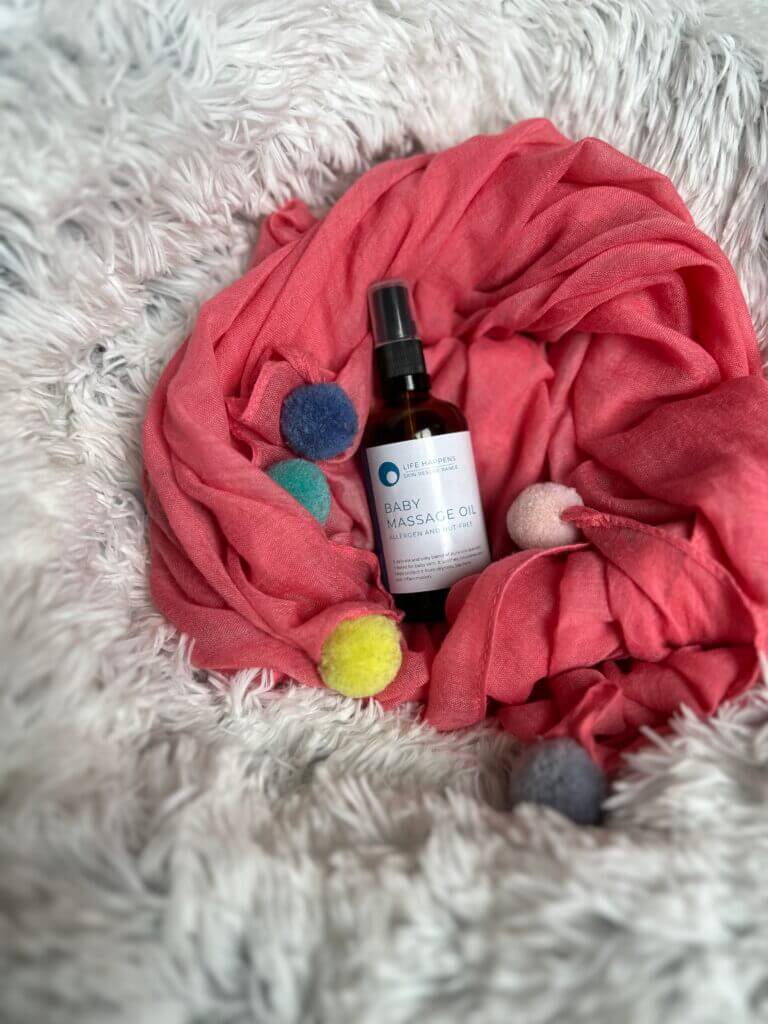
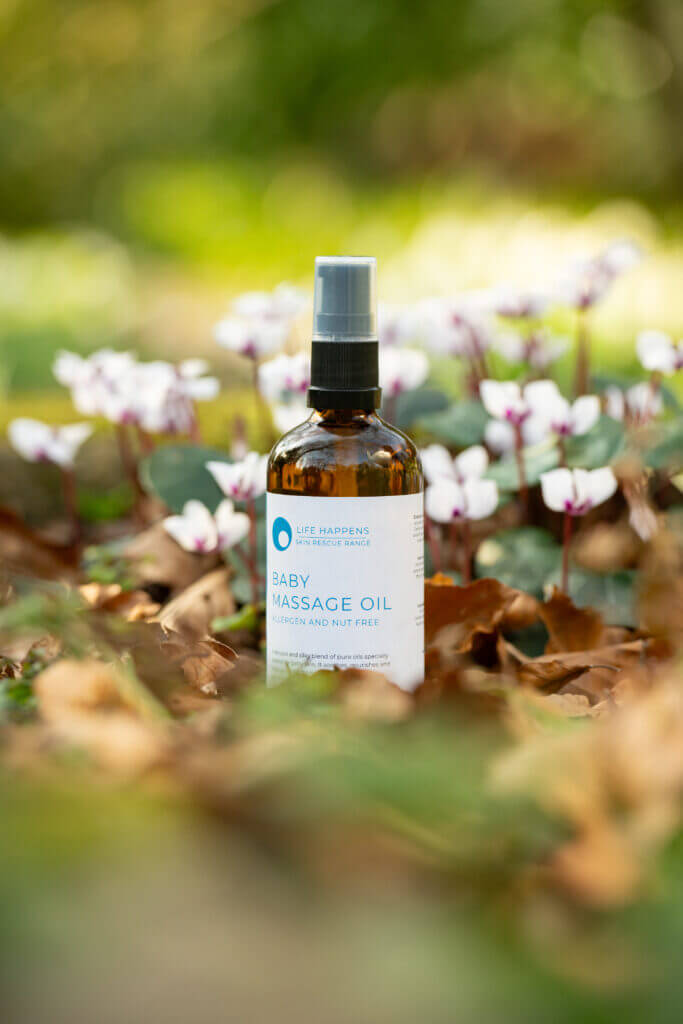
So, in short, a non-allergenic, nut-free, chemical, paraben and paraffin-free oil is best. This baby massage oil https://lifehappensskinrescue.com/product/baby-massage-oil/ has been created to be as clean and nutritious as possible. Its ingredients will help nourish your baby’s skin as well as heal and protect it.
It is worth reading the blog on Baby Barrier Creams as they are not equal in purity or ingredients. Unfortunately, most contain chemicals, allergens and paraffin (think petrol). The question to ask with anything containing paraffin/petroleum is – would you stand under a petrol nozzle and pour it over yourself, expecting it to heal your skin? The likely answer is no, and yet it is used in countless products for babies, children and adults without the consequences being highlighted. It’s cheap and serves an immediate purpose, but its longer-term effects are not helpful.

Safety First
It’s suggested that you don’t begin baby massage until after the first four weeks unless you’ve been advised to do it by a professional.
Ensure that the baby is on a flat surface and cannot roll over or fall. It’s also important to be in an environment that is warm, safe and relaxing. Be involved, focused and alert, so loud music or noise and mobile phones may need to be avoided. Don’t get distracted as it may be unsafe for you to lose concentration or walk away.
Wash your hands before starting and avoid any oil going close to, or into, the baby’s eyes. Remember, once you’re finished massaging your baby, your baby’s skin will be slippery, and your hands will still have oil on them so be careful when moving or lifting the child.
Massage methods vary, so you may want to read up on the different techniques or methods and see what suits the two of you best. It’s worth spending some time looking into it as it’s necessary to use gentle, lightly firm strokes, mostly moving away from the heart; for example, start at the top of the shoulder and stroke downwards towards the wrist. You’ll also need to learn how to hold the different parts of the baby’s body, such as the wrist or leg, when massaging the limbs and how to support the head.
Never press too hard or let the baby’s mouth or nose be blocked. If your baby isn’t well, then delay the massage or gently massage the back and chest while sitting rather than lying down. Massage is for enjoyment and bonding, so it’s not necessary to do it if either of you isn’t in the mood or is feeling under the weather. In fact, it’s probably safer not to do it at these times.
Understanding Your Baby’s Cues
Babies tell us what they want, even if they can’t talk, so look for signs that show your baby is ready for a massage.
Good signs include:
- Calm, alert state
- Making eye contact
- Relaxed body
Stop if your baby:
- Turns away
- Cries or fusses
- Seems stiff or tense
You can read more of these here.
It’s best to massage when your baby is not too hungry or too full and pick a time when they’re content but awake. Find a routine that accommodates a massage, such as after a bath to help relaxation and sleep. Others might prefer morning massages as a way to start the day on a positive and connected note. What’s important is that there’s some consistency as that is when massages work the best and the benefits can be maintained.
Research and Studies
Many studies have looked at how baby massage affects infants. Researchers have found several good things that can happen when babies get massages.
Massage therapy for preterm infants has been studied a lot as these babies often have specific needs. The research shows that massage can help them in many ways:
- Gain weight faster
- Get stronger immune systems
- Develop better thinking skills
- Grow their brains better
- Leave the hospital sooner
For full-term babies, studies also show benefits. Research on infant massage found it can help with:
- Lowering bilirubin levels (which cause jaundice)
- Help babies gain more weight
One study focused on low birth-weight babies. It found that massage helped these infants gain more weight than those who didn’t get massages.
Research keeps finding new ways that baby massage can help. As more studies are done, we learn more about how touch can support infant health and growth.
Conclusion
Baby massage is not an essential component of parenting infants, but there is significant evidence to show that it has considerable health benefits as well as psychological ones as it increases bonding between parent and child. This bond is increased by the hormones released during the positive experience for both, which has a lasting psychological and cognitive impact.
In essence, baby massage is, and should be, an enjoyable, soothing and connecting experience for parents (or caregivers) and children.